.jpg)
The latest from Jicate
News, announcements, and updates from across the company.
Read Jicate ExplainedTurn your experts' know-how into object-aware alerts, and wire those alerts straight to action across the business.

Author rules, watch live data, and route alerts to the people who can act on them.

We needed a way inside Foundry to surface trends and events across weeks or months from our streaming data. With well over a hundred rules already running, the team can monitor a huge range of equipment in real time.
Foundry Rules & Real-Time Alerting retired a pile of bespoke dashboards for us. Its flexible, low-code approach made it easy for people across the company to pick up and roll out.
— Principal Product Manager, Energy

Build rules on top of datasets, ontology objects, time series, and more — with the Foundry Ontology giving every rule a real-world picture of your business to work from.
Try a candidate rule against your history first, so you can ship it to production knowing how it would have behaved.
Bring software-style change management to rules: propose and revise them through pull requests, with many edits in flight at once — each submitted, reviewed, and tracked.
Raise alerts inside the platform or push them out to third-party tools — incident response, text messages, and more — so they reach the right decision-makers wherever they are.
Every decision made on an alert is captured and fed back into models, which then suggest fixes — or act on alerts automatically — to cut response time when it matters most.
Rules work best when the people who know the domain build them — no coding needed. A point-and-click, low-code interface lets non-technical users own and tune complex business logic themselves.
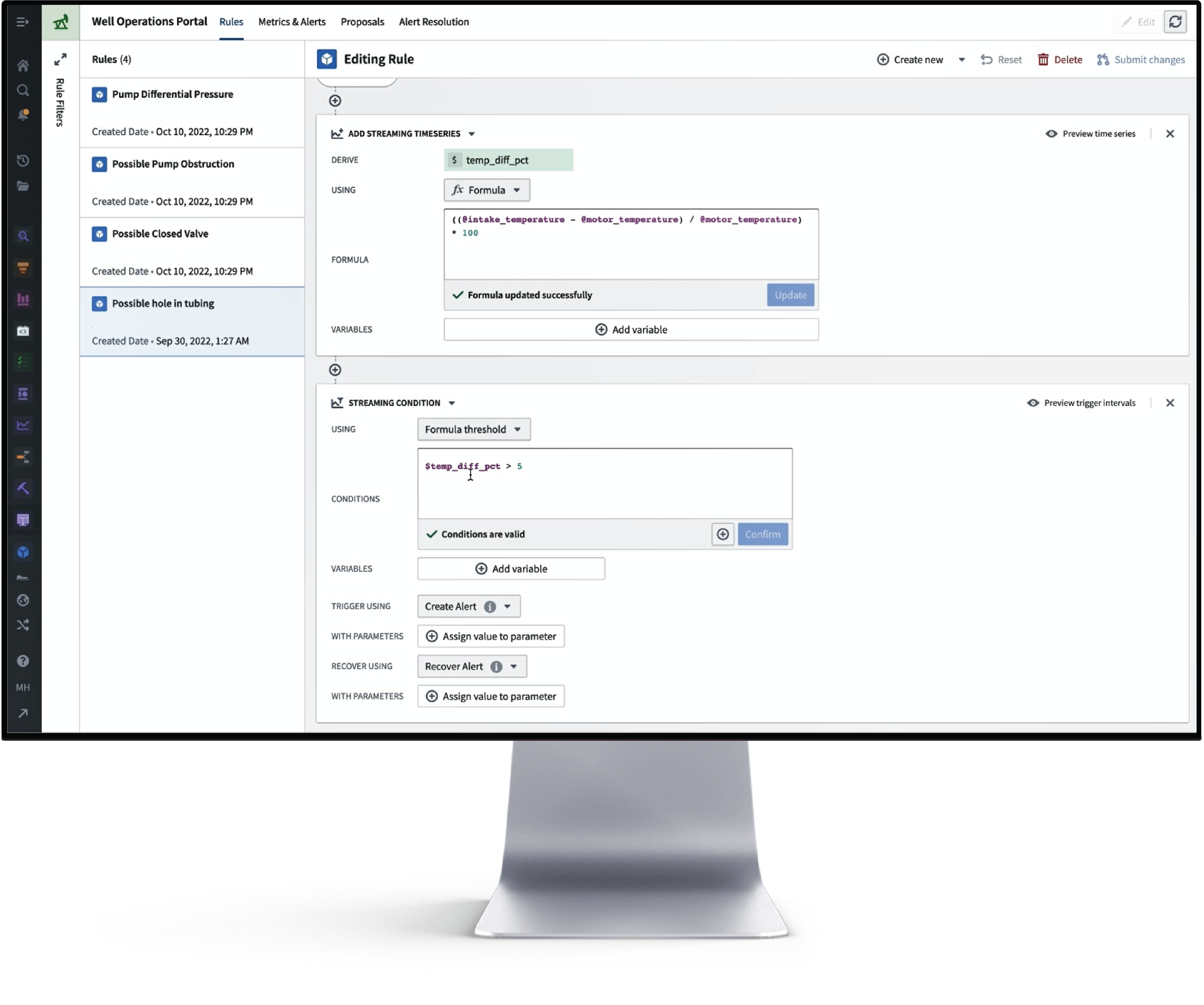
Run rules over datasets, objects, and time series with billions of streaming points for live monitoring and alerting — all inside the Foundry Ontology, so users always work against a real-world view.
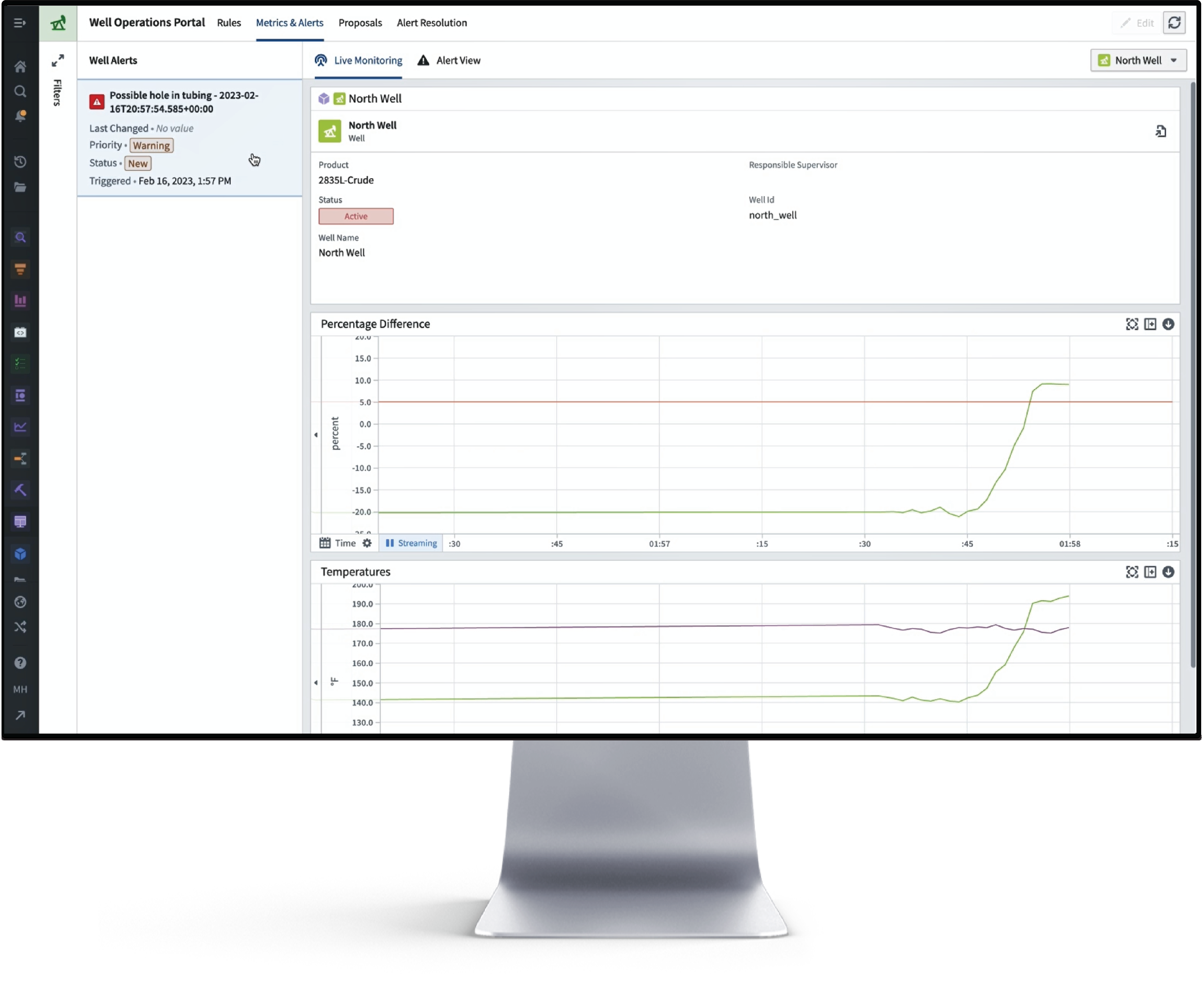
Act on alerts from Workshop apps. In-platform metrics show the impact of each choice as you resolve an alert, and the Foundry Ontology coordinates the systems involved — closing the loop and feeding what's learned back into the next decision.
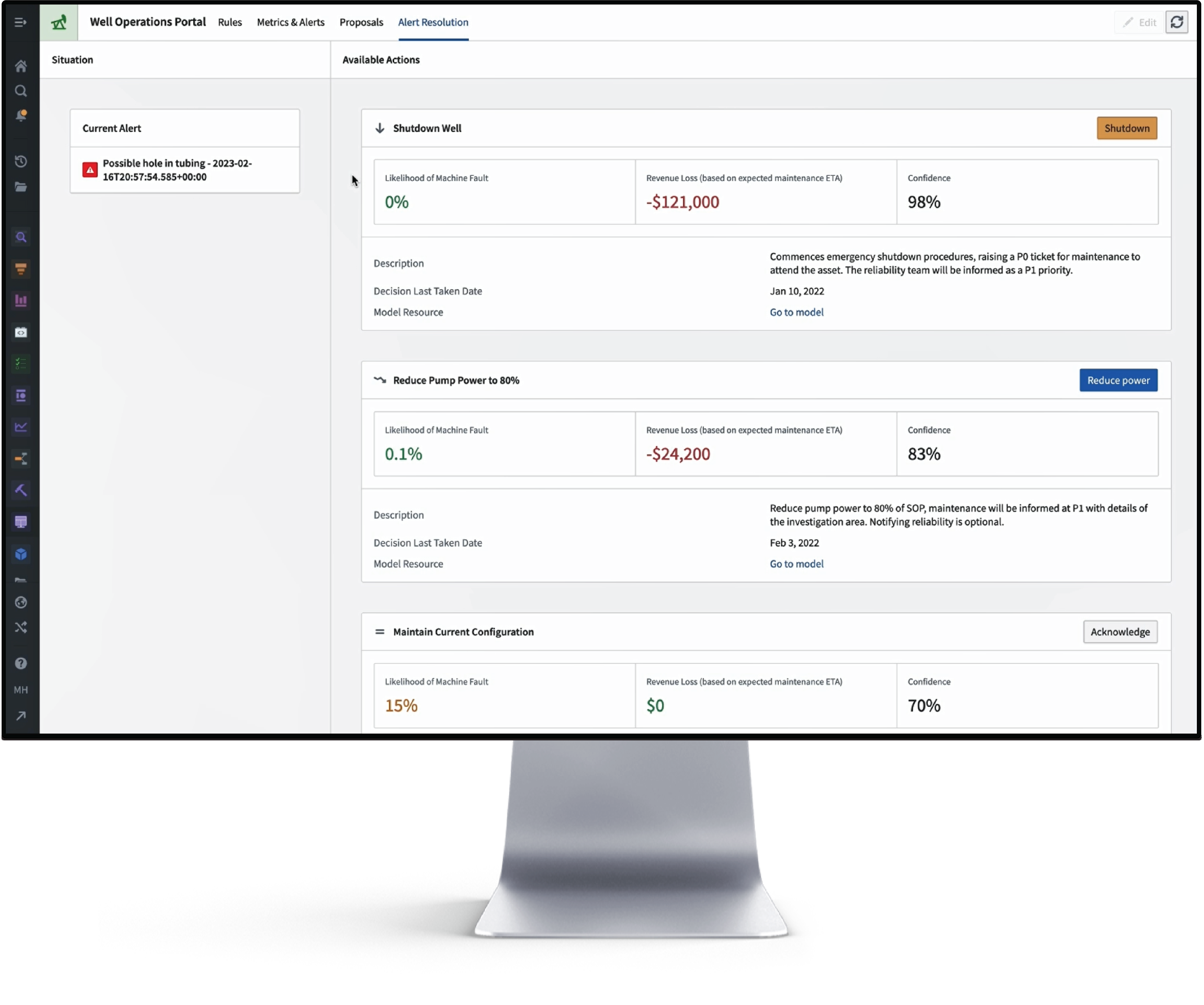
Equipment Monitoring. Raise alerts on possible equipment wear or damage from sensor readings such as temperature or pressure.
Cohorting. Sort entities into groups or cohorts based on shared attributes for sharper, more targeted action.
Service Availability. Keep an eye on service uptime to head off interruptions and avoid triggering costly contractual penalties.
Data Labeling. Define automatic labeling rules that turn raw data points into clean inputs for AI/ML models.
Anti-Money Laundering. Flag suspicious activity with rules that look at both individual transactions and aggregate patterns.
Quality Control. Spot the patterns that point to a substandard product and stop defective goods before they ship.