.jpg)
The latest from Jicate
News, announcements, and updates from across the company.
Read Jicate ExplainedAccelerate pipeline development and management with built-in automation. Deliver the full spectrum of use cases atop a trusted foundation, solving problems as quickly as business needs evolve.
Get a Demo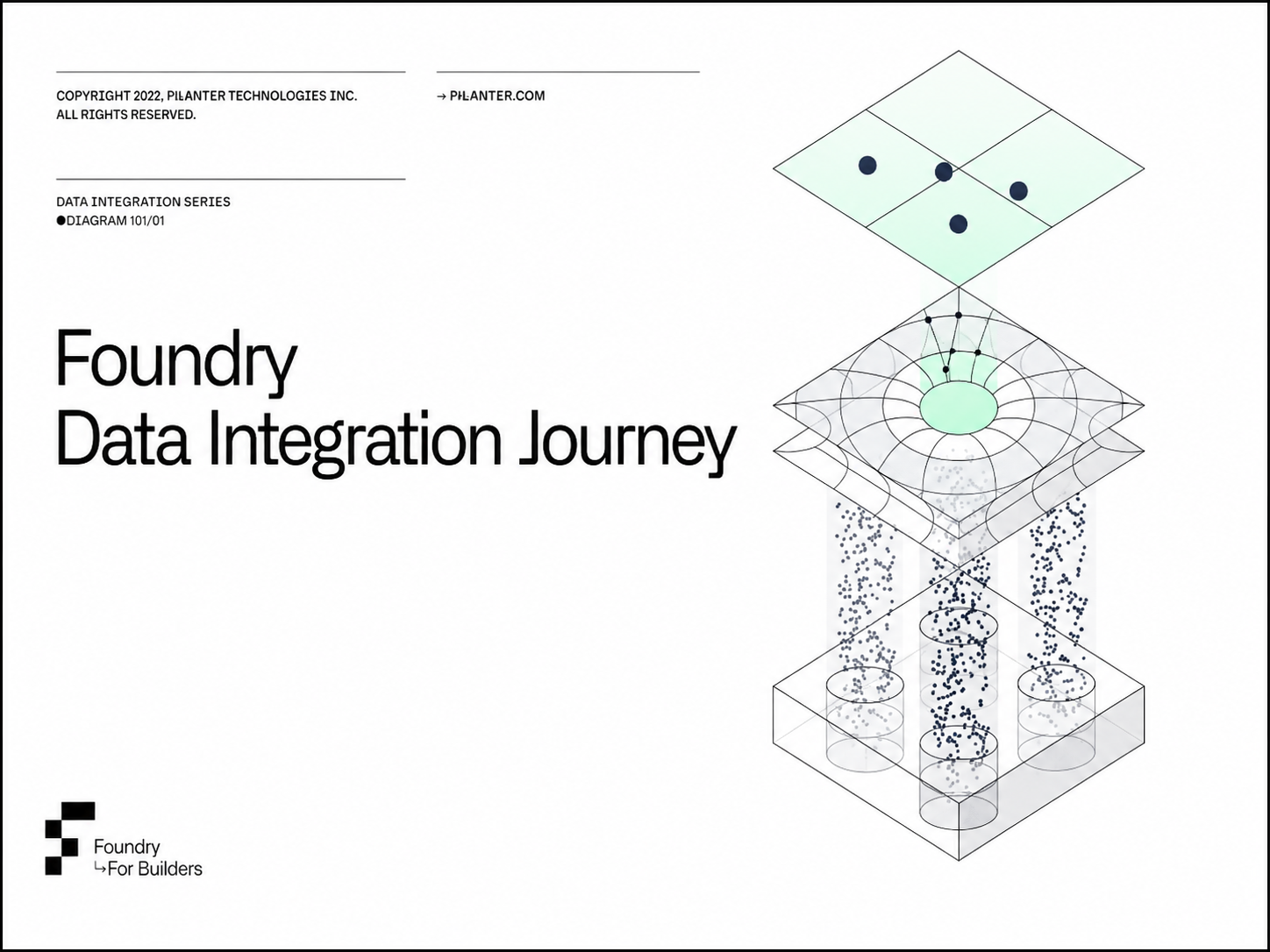

Unlock complex data estates in hours. Jicate Hyperauto enables automatic and dynamic pipeline generation for the most common ERP, CRM, and SQL stores.

Foundry offers both code-based and no-code interfaces for authoring production-grade pipelines. In both cases, Foundry treats data like code — bringing the power of git-style branching, merging, and rich change management to data pipelines.

Foundry is an open platform that connects to your existing data lakes, warehouses, lakehouses, data science environments, and BI tools. Beyond open interfaces, native connectors move every type of data and metadata — structured, unstructured, or streaming — in and out without lock-in.

Intelligent pipeline orchestration provides live data monitoring, temporal drift detection, and cost-effective refreshes. Foundry cuts spend and painful manual configuration with version tracking, job introspection, aggregate reporting, and alerting.
Power diverse BI, analytics, AI, and operational applications from a single, unified integration layer.
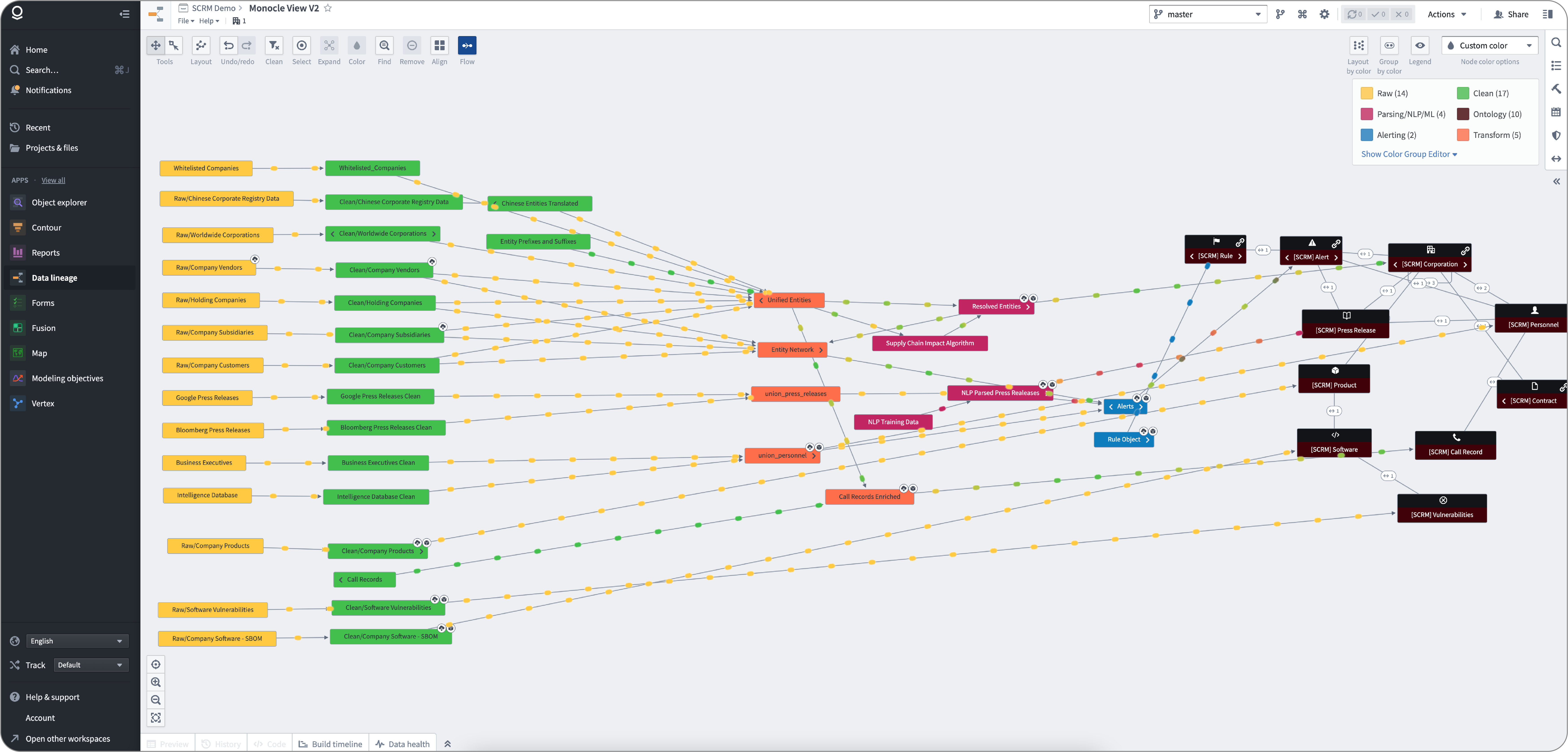
Move past theoretical, best-guess lineage crawlers. Foundry captures active metadata and full user attribution to apply and maintain lineage across every data element automatically. Every version of every dataset records exactly which code and parent datasets produced it.
Eliminate “bolt-on” and legacy cloud security approaches. Foundry enforces role-, marking-, and purpose-based access controls as active, immutable metadata. Its security and lineage engines work in concert, giving a detailed account of who accessed what, and why, across data versions.
Bring data quality to life through an integrated suite for defining, monitoring, and responding to data issues across all assets. Proactive health checks apply via point-and-click or code, operating at the level of individual jobs or entire pipeline orchestrations with granular success criteria.
Bring branching, merging, and granular change management to data pipelines. Branching isolates proposed changes in a sandboxed branch that can be fully materialized, examined, and iterated on with atomic commits — with impact analysis on every downstream asset.
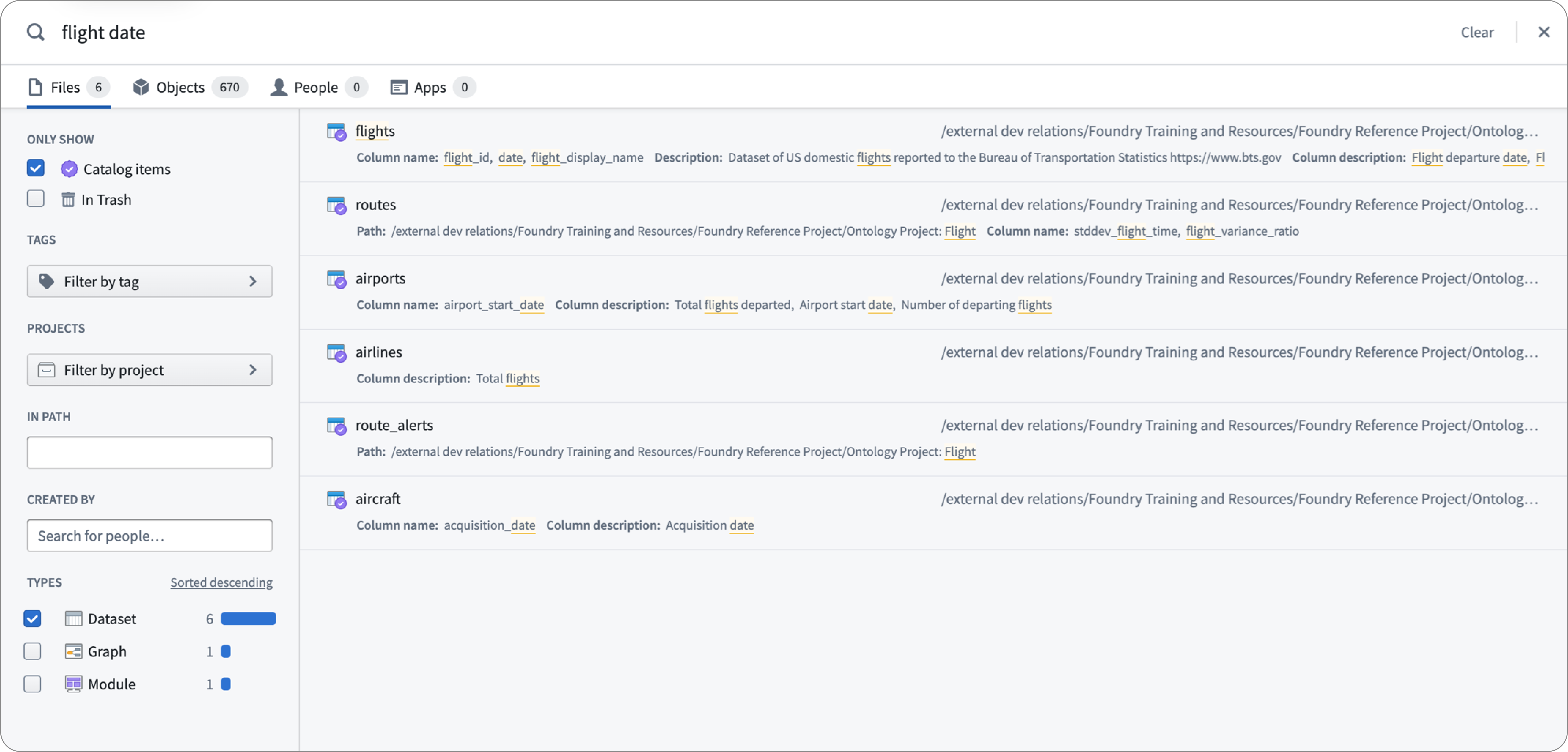
Leverage integrated applications like Foundry Data Catalog for search, cataloging, metadata management, and dataset and usage analytics. The catalog offers a curated view of data, while search traverses every key metadata field.
Use a full suite of project-management capabilities with rich controls for user access, SDLC policies, and resource management. Federated governance and role management help projects scale while dynamic resource tracking keeps IT in control.
Enable a broad range of advanced SQL integration and consumption patterns with JDBC and ODBC connectivity. A Spark-based engine powers complex queries, and a Direct Read engine can bypass Spark to stream data straight to the consumer.
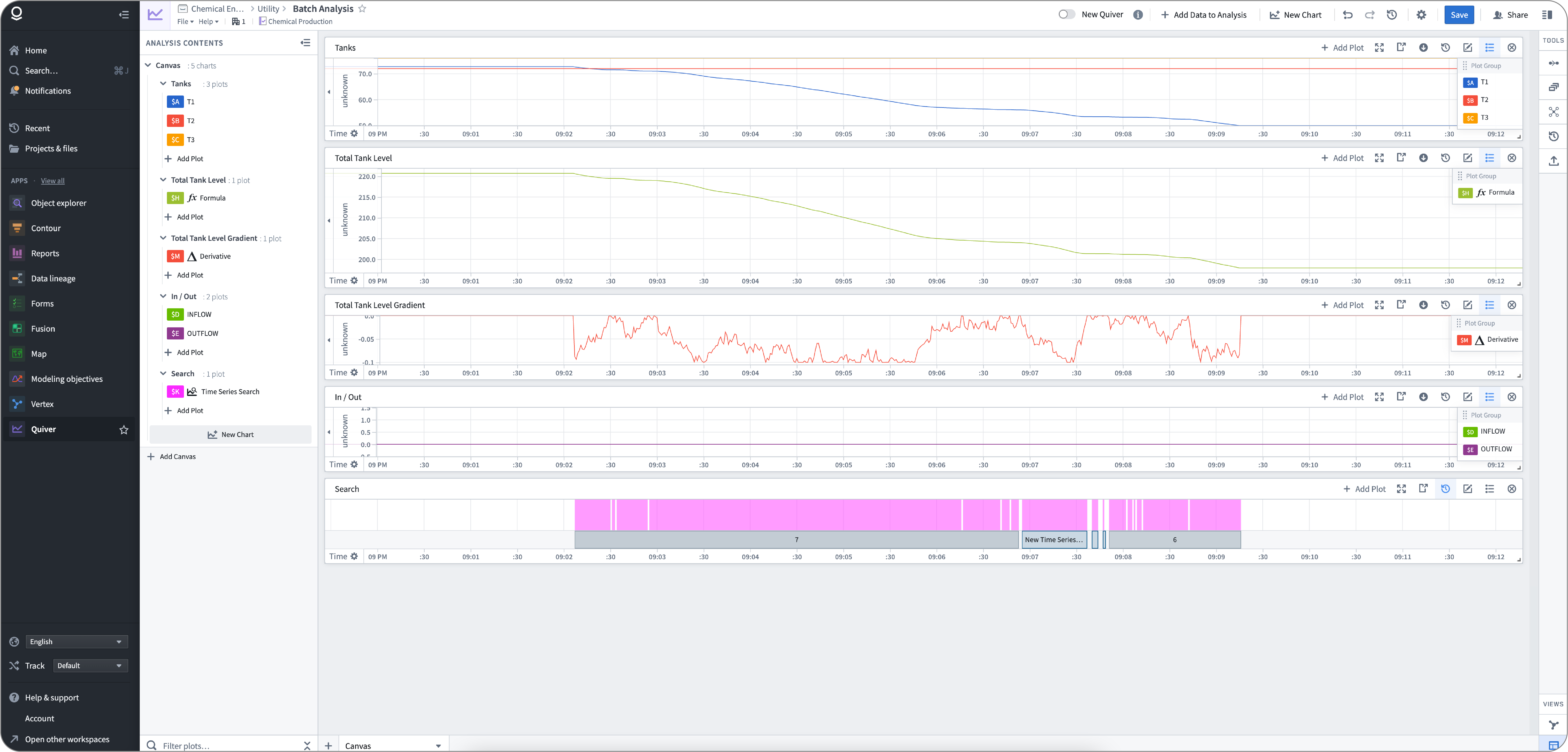
Quiver puts time-series analytics in users’ hands like never before. On the backend, a next-generation time-series database eliminates the traditional trade-offs of warehouse and data-lake architectures, scaling horizontally as usage and data volume grow.
Fuel the next generation of analytics and operational software with object and action modeling. REST APIs unlock the ability to access, monitor, and evolve semantic object backends — powering enterprise-scale digital twins.
A Kubernetes-based service mesh delivers autoscaling even in the most complex operational settings. Battle-tested in demanding environments, the mesh provides ephemeral nodes, rich cost accountability, and secure code execution.
Every component within Foundry is powered by Apollo, the next-generation platform for autonomous scaling, management, and monitoring of critical infrastructure.
Stay in command with Foundry’s full-spectrum governance that weaves together control planes for data and metadata governance, usage governance, rich reporting, and federated workflows.
A global energy company uses Jicate to integrate more than 300 ERP datasets and flag attempts to buy materials already held in inventory. With all ERP data unified, an alerting workflow identifies surplus materials and catches duplicate orders before they are placed — surfacing tens of millions in recoverable working capital.