.jpg)
The latest from Jicate
News, announcements, and updates from across the company.
Read Jicate ExplainedPower next-generation operations with semantic data, AI/ML-based twins, and twin-based simulations.
Get a Demo

Bring the full range of your data and models into one unified, governed, and living representation of your organization. Scale the investments you already have and put decision-making in the hands of every team — in language they already understand.

Orchestrate the flow of data and models through real operational workflows. Give data scientists, ML engineers, business owners, and operators one shared substrate to build on together.
Get to know Jicate AI/ML
Move past read-only dashboards. Build applications that read and write — taking real-world actions back into the systems that run your business.
Talk to a Jicate expert
Run SQL workflows, object-driven semantic analysis, low-latency time-series analytics, imagery workflows, and far more — all on a single twin.
Connect teams. Maximize data and model interpretability. Simulate future states of the world. Capture decisions.
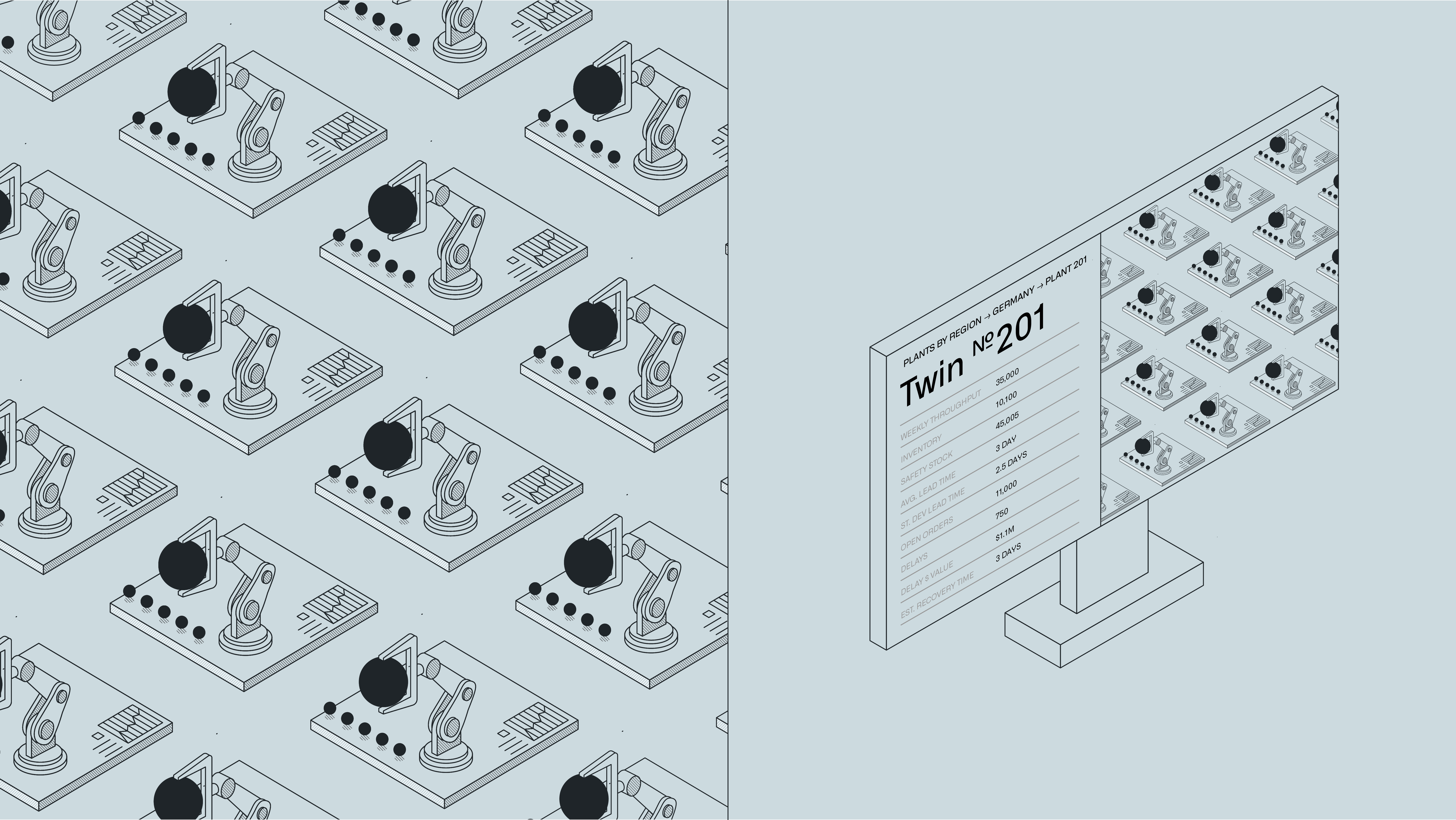
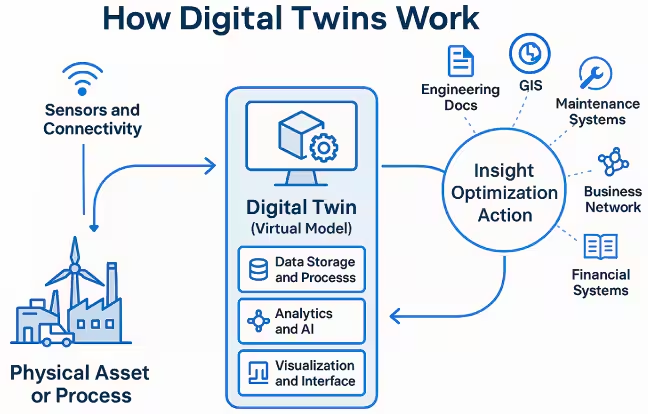
The Ontology underpins every digital twin, mapping your datasets and models to object types, properties, link types, and action types to build a complete, living picture of your organization's world.
Evolve from a legacy world of files and tables into a semantic, intuitive representation of your operations. Full-fidelity twins hold granular, live detail about real-world entities and events — customers, factories, work orders, shipments.
Bring your landscape to life with native modeling of the actions and processes in your enterprise. Every operational action — such as adjusting pressure on a valve — can be modeled, associated, and governed.
Visualize and quantify cause and effect across the twin of your organization, and simulate future conditions to make optimal decisions and find the changes that matter most.
Unlock next-generation analytics that are truly self-service and empower operational users. Every element of your twin — forecasts, parts, customers — can be explored and securely updated through consistent, durable interfaces. Open APIs power your existing BI, like Tableau or Microsoft Power BI.
Use purpose-built applications for complex analytical workflows, and let object-aware apps trigger actions on underlying systems through a fully governed, auditable framework that keeps every workflow consistent.
Monitor, simulate, and optimize operational decisions based on current, predicted, or proposed conditions. Simulations can be backed by simple logic-based rules, physics models, deep-learning models, or hybrid approaches.
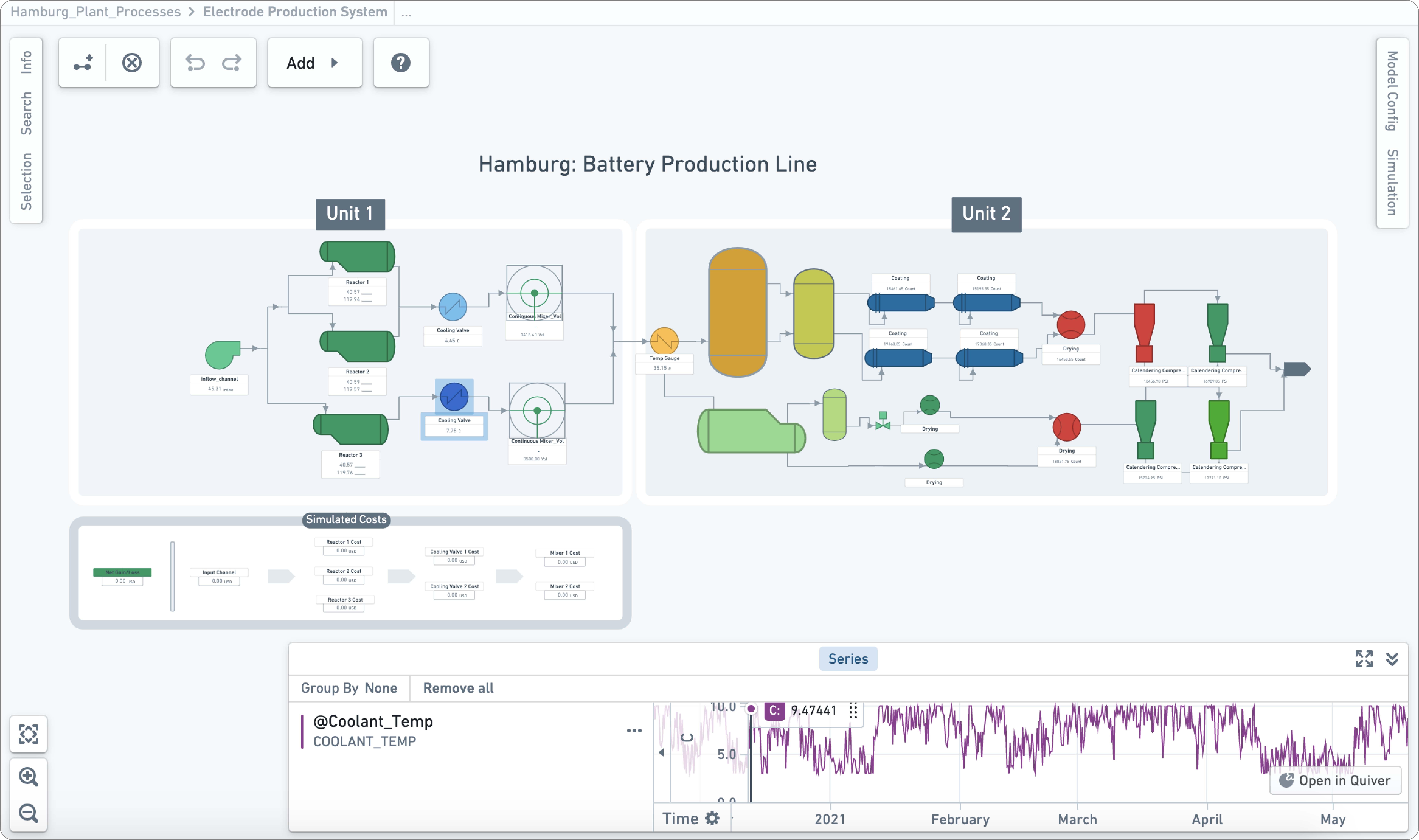
Interact with and interrogate your digital twin through integration with any model, forecast, or business logic published on the platform.
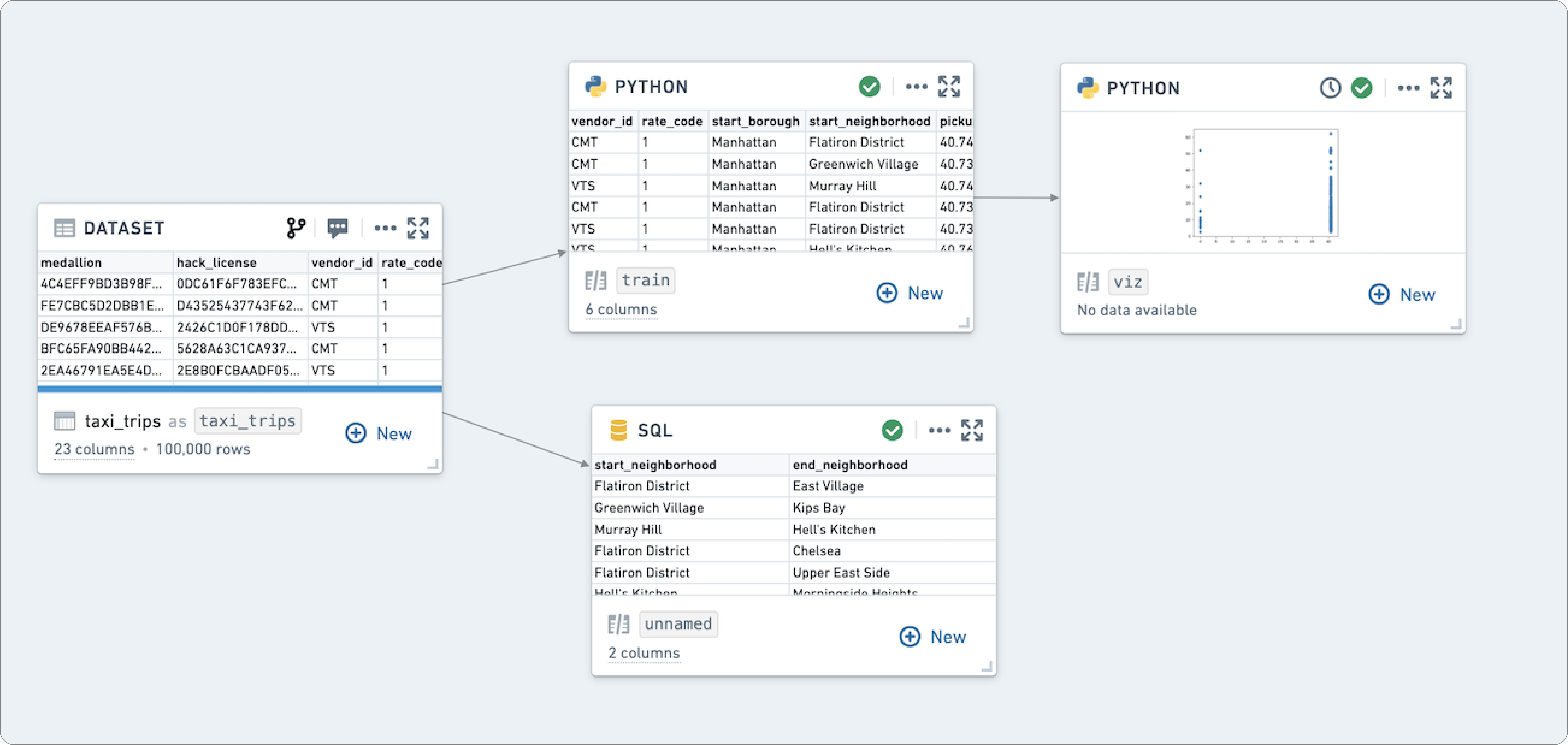
By incorporating AI/ML models with native model integration, your digital twin becomes a single source of truth — not just for data, but for logic.
Integrate models built in other tools (e.g. SageMaker, AzureML, Vertex AI) or author them from scratch. Once on the platform, a model-management framework operationalizes logic across the twin and provides a gateway for context, relevant data, metadata, and evaluation of candidates.
Your twin is a shared substrate for everyone invested in model performance. As operators, processes, and systems make decisions and act, the platform captures it as new data — feeding monitoring, evaluation, re-training, and MLOps.
Make it easy for end users to understand model results without needing to know machine learning. Outputs are defined in real-world terms — a forecast, an estimate, a classification.
At a Fortune 100 consumer-goods company, the platform integrated 7+ ERP data sources to produce a digital twin of the organization's value chain. The twin provides the substrate for a granular COGS and profitability model that applies at the SKU level.
Optimizing raw-material purchases now takes minutes instead of weeks — and is projected to generate millions in annual savings.
Profitability was reported only at an aggregate company level, but the customer needed to compute it with far more granularity to optimize COGS, improve output, and inform daily operations. The data lived across more than seven ERP systems, where it is stored natively and is inaccessible to most decision-makers — every analysis took weeks of costly manual work, and a growing backlog meant IT had to postpone its most valuable projects.
The platform integrated 7+ ERP data sources into a digital twin of the value chain — from the hand of the supplier to the hand of the customer.
Instead of querying complex ERP databases, supply-chain managers, plant managers, and demand planners now interact in a no-code way with a real-world object model of plants, SKUs, customers, and other core business concepts.
This foundation lets analysts build a granular COGS and profitability model at the SKU level. New workflows incorporating these models help teams: